Programs Offered
- B.Tech in Information Technology
 Syllabus
Empowering Possibilities through Information Technology.
 Syllabus
To provide an enriched academic environment with quality research in Information Technology
Graduates of the program will possess strong fundamental concepts in mathematics, science, engineering and technology to address technological challenges.
Possess knowledge and skills in the field of Computer Science & Engineering and Information technology for analysing, designing and implementing complex engineering problems of any domain with innovative approaches.
As one of the best IT Engineering Colleges in Nashik, we instill the attitude and aptitude for research, entrepreneurship and higher studies in the field of Computer Science & Engineering and Information Technology.
As one of the best Colleges in Nashik for Engineering, we inspire students to be committed to ethical practices, societal contributions through communities and lifelong learning.
Possess better communication, presentation, time management and team work skills leading to responsible & competent professionals and will be able to address challenges in the field of IT at global level.
An ability to apply mathematical foundations, algorithmic principles and computer science theory in the modelling, design and development of computer-based systems of varying complexity.
An ability to acquire emerging technologies and evaluate their applicability to address the users’ needs in the dynamic field of IT.
Engineering knowledge: Apply the knowledge of mathematics, science, engineering fundamentals, and an engineering specialization for the solution of complex engineering problems.
Problem analysis: Identify, formulate, research literature, and analyse complex engineering problems reaching substantiated conclusions using first principles of mathematics, natural sciences, and engineering sciences.
Design/development of solutions: Design solutions for complex engineering problems and design system components or processes that meet the specified needs with appropriate consideration for public health and safety, and cultural, societal, and environmental considerations.
Conduct investigations of complex problems: Use research based knowledge and research methods including design of experiments, analysis & interpretation of data and synthesis of the information to provide valid conclusions.
Modern tool usage: Create, select, and apply appropriate techniques, resources, and modern engineering and IT tools, including prediction and modelling to complex engineering activities, with an understanding of the limitations.
The engineer and society: Apply reasoning informed by the contextual knowledge to assess societal, health, safety, legal, and cultural issues and the consequent responsibilities relevant to the professional engineering practice.
Environment and sustainability: Understand the impact of the professional engineering solutions in societal and environmental contexts, and demonstrate the knowledge of, and need for sustainable development.
Ethics: Apply ethical principles and commit to professional ethics and responsibilities and norms of the engineering practice.
Individual and team work: Function effectively as an individual, and as member or leader in diverse teams, and in multidisciplinary settings.
Communication: Communicate effectively on complex engineering activities with the engineering community and with t h e society at large, such as, being able to comprehend and write effective reports and design documentation, make effective presentations, and give and receive clear instructions.
Project management and finance: Demonstrate knowledge and understanding of the engineering and management principles and apply these to one’s own work, as a member and leader in a team, to manage projects and in multidisciplinary environments.
Life-long learning: Recognize the need for, and have the preparation and ability to engage in independent and life-long learning in the broadest context of technological change.






.webp)

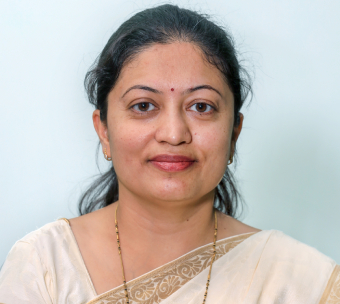
As parents, we are very pleased with Ishwari's (TYIT) experience at K. K. Wagh. The professors ensure one-to-one interaction with students and give personal attention to each student's growth. They continuously motivate students to enhance their creativity, push their boundaries, and achieve extraordinary goals. We are grateful for the college's dedication to supporting students in their academic and personal development. Overall, we highly recommend this college to any student seeking a high-quality education in engineering.


Hirabai Haridas Vidyanagari, Amrutdham, Panchavati, Nashik – 422003

_s.jpg)


 Chat
Now
Chat
Now