 Syllabus
Department of
Electronics & Telecommunication Engineering

One Step Ahead
Why?
E & TC in K K Wagh?
- Since 1984
- Thrice accredited by NBA
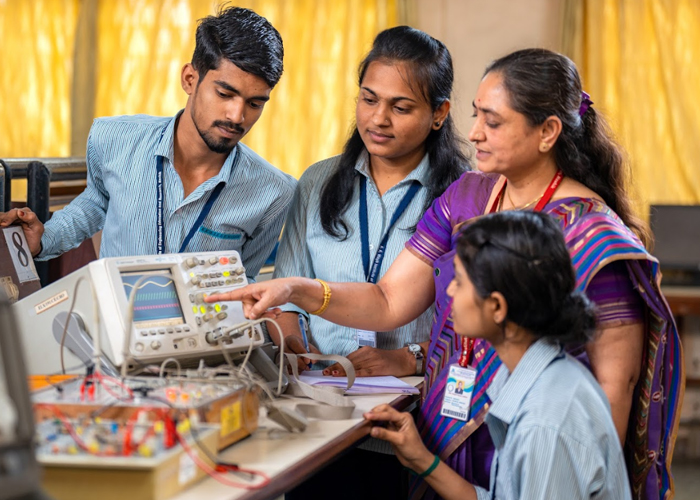
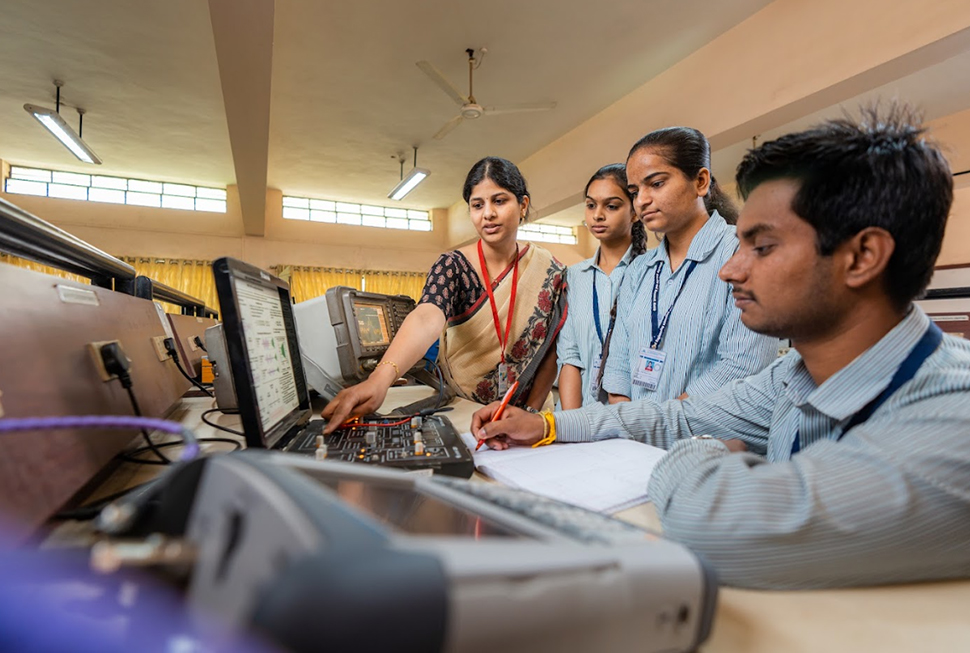
- Centre of excellence by Texas Instruments and Emerson
- Addressing 21st century skills and cutting edge technology tools as per industry needs
Vision
Excel in quality technical education and research in Electronics and Telecommunication (E&TC) Engineering for sustainable development of industry and betterment of society.
Mission
- To provide quality education for the preparation of technically and professionally competent E&TC engineers.
- To create an environment to enhance life-long learning and 21st century skills
- To inspire students’ innovative thinking and creativity to promote research culture.
PEO 1
Solve real life problems in diverse fields using knowledge of Electronics and Telecommunication Engineering by adopting industrial practices.
PEO 2
Exhibit 21st century skills required for successful career.
PEO 3
Provide a supportive and stimulating environment for research
PEO 4
Imbibe innovative thinking, creativity and lifelong learning culture
Program Educational Objectives (PEO): PG
PEO 1
Identify and apply appropriate Electronic Design Tools to solve real world problems in VLSI and Embedded Systems to create innovative products and systems.
PEO 2
Develop managerial skills and apply appropriate approaches in the domain of VLSI and Embedded Systems for industrial as well as societal needs incorporating safety, ethics and sustainability and become a successful professional or an Entrepreneur.
PEO 3
To continue to learn and advance career through activities such as research and development, acquiring doctoral degree, participation in national level research programs, teaching and research at university level.
PSO 1
Analyse, design, prototype and test analog and digital electronic systems using multidisciplinary approach.
PSO 2
Apply knowledge of Signal processing, Communication Engineering, Microcontroller and VLSI to solve the problems in the field of electronics and telecommunication engineering and automation.
PO 1
Engineering knowledge: Apply the knowledge of mathematics, science, engineering fundamentals, and an engineering specialization for the solution of complex engineering problems.
PO 2
Problem analysis: Identify, formulate, research literature, and analyse complex engineering problems reaching substantiated conclusions using first principles of mathematics, natural sciences, and engineering sciences.
PO 3
Design/development of solutions: Design solutions for complex engineering problems and design system components or processes that meet the specified needs with appropriate consideration for public health and safety, and cultural, societal, and environmental considerations.
PO 4
Conduct investigations of complex problems: Use research based knowledge and research methods including design of experiments, analysis & interpretation of data and synthesis of the information to provide valid conclusions.
PO 5
Modern tool usage: Create, select, and apply appropriate techniques, resources, and modern engineering and IT tools, including prediction and modelling to complex engineering activities, with an understanding of the limitations.
PO 6
The engineer and society: Apply reasoning informed by the contextual knowledge to assess societal, health, safety, legal, and cultural issues and the consequent responsibilities relevant to the professional engineering practice.
PO 7
Environment and sustainability: Understand the impact of the professional engineering solutions in societal and environmental contexts, and demonstrate the knowledge of, and need for sustainable development.
PO 8
Ethics: Apply ethical principles and commit to professional ethics and responsibilities and norms of the engineering practice.
PO 9
Individual and team work: Function effectively as an individual, and as member or leader in diverse teams, and in multidisciplinary settings.
PO 10
Communication: Communicate effectively on complex engineering activities with the engineering community and with t h e society at large, such as, being able to comprehend and write effective reports and design documentation, make effective presentations, and give and receive clear instructions.
PO 11
Project management and finance: Demonstrate knowledge and understanding of the engineering and management principles and apply these to one’s own work, as a member and leader in a team, to manage projects and in multidisciplinary environments.
PO 12
Life-long learning: Recognize the need for, and have the preparation and ability to engage in independent and life-long learning in the broadest context of technological change.
Program Outcomes (POs): PG
PO 1
An ability to independently carry out research /investigation and development work to solve practical problems
PO 2
An ability to write and present a substantial technical report/document
PO 3
Students should be able to demonstrate a degree of mastery over the area as per the specialization of the program. The mastery should be at a level higher than the requirements in the appropriate bachelor program
PO 4
Create, select, learn and apply appropriate techniques, resources, and modern EDA tools with an understanding of the tools limitations.
PO 5
To contribute positively to collaborative-multidisciplinary scientific research, demonstrate a capacity for self-management and teamwork, decision-making based on open-mindedness, objectivity and rational analysis in order to achieve common goals.
PO 6
Demonstrate knowledge and understanding of engineering and management principles, as a member and leader in a team, manage projects efficiently in respective disciplines and multidisciplinary environments after consideration of economical and financial factors.
Our Recruiters













Happenings
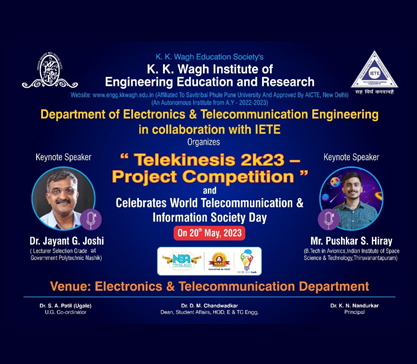
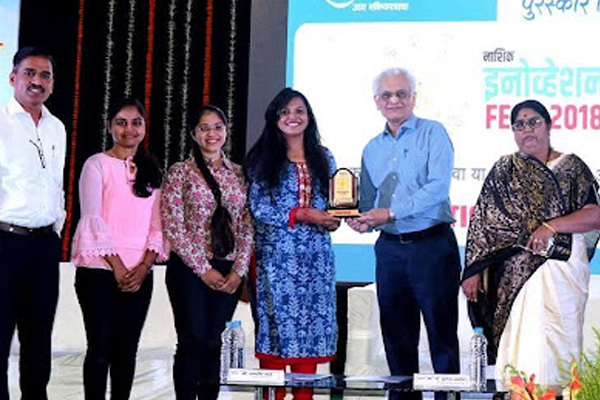
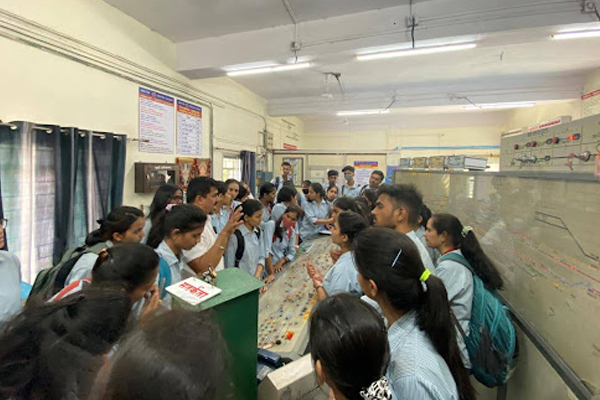
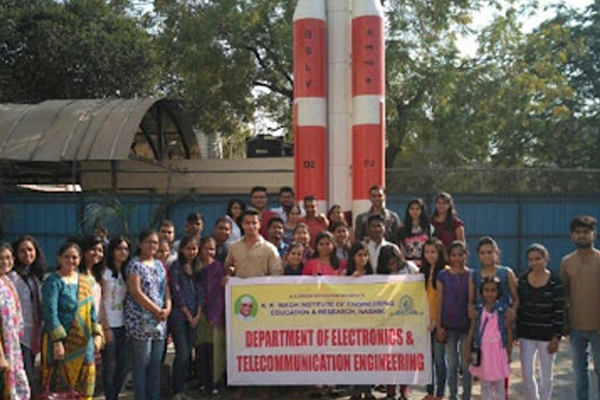
Everything that enthuses people at our Institute.
Testimonials
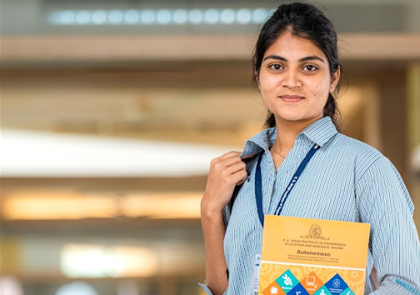

I have the privilege of being a part of K.K. Wagh Institute's Electronics and Telecommunication Engineering department, and I can confidently say that my experience here has been exceptional. The department boasts a team of highly knowledgeable and dedicated faculty members. Department organises various workshops regularly. They offer hands-on experience with the latest technology and equipment, preparing students for real-world challenges. Institute regularly invites industry experts to share their insights and experiences with students. The college is a hub of opportunities, whether it's through internships, research projects, or placement assistance. Beyond academics, the college encourages participation in various co-curricular activities. These help in overall personality development and provide a platform to showcase talents. In conclusion, K.K. Wagh Institute has been a nurturing and empowering institution for students. It's not just about academics here; it's about holistic development, exposure to industry trends, and a commitment to a sustainable future. I am proud to be associated with this esteemed institution.

K. K. Wagh Engineering College, Education and Research, located in Nashik, offers a vibrant student life that combines academics and extracurricular activities seamlessly. The faculty here is knowledgeable and approachable, fostering a conducive learning atmosphere. The campus environment is both serene and inspiring. With a variety of clubs and opportunities for personal growth, it's a great place to pursue engineering education.
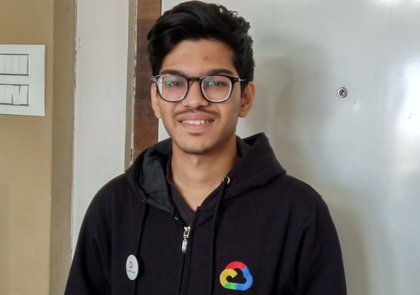
I have the privilege of studying at the K K Wagh Institute of Engineering Education and Research for the past three and a half years, and my journey here has been nothing short of enlightening. The dedicated teaching and administrative staff have consistently ensured that students are well-prepared to embrace the ever-evolving landscape of market opportunities and future trends. Moreover, the exceptional placement opportunities make it a standout choice. Overall, K K Wagh Institute is an excellent institution to kickstart one’s career.

I am grateful to be a student at this college, where the E&TC department has played an important role in providing me with a deep understanding of the field. This institution’s commitment to academics, experienced professors and practical coursework has helped me greatly. The hands-on learning experiences that I have gained here are invaluable for my future.
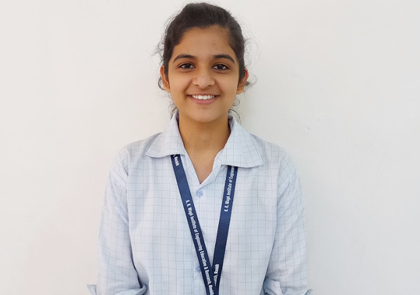
The faculty members are highly knowledgeable and approachable, always ready to assist students. The practical-oriented approach to learning, well-equipped labs, and an extensive library make the academic journey highly enriching. Overall a good college to start the career.


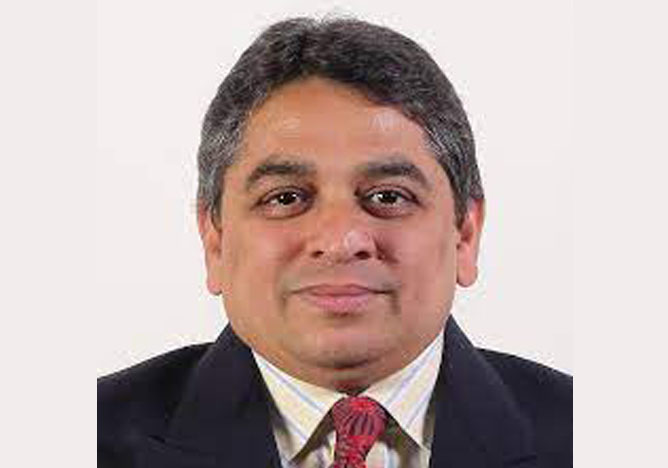
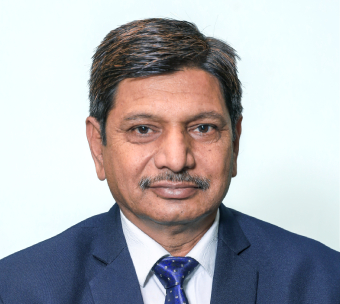
K. K. Wagh Institute nurture talent and support, develop budding engineers. Institute & management emphasis on overall development of individuals. All teaching & non-teaching staff provides healthy environment for students to follow their interests. It is pleasure to be associated with the institute as recruiter and providing career opportunities to Graduate engineers.

“Being a part of the K K Wagh institute of engineering Education and Research is real satisfaction and privilege for me. The way in which teaching and learning is accomplished is unique. At K K Wagh we believe in the all round personality enhancement of our students.”
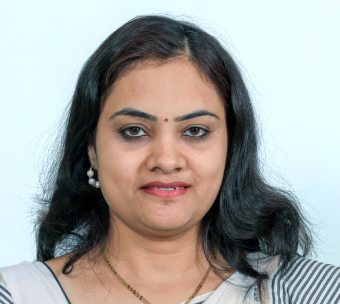
“I am grateful to K. K. Wagh Engineering College, Nashik, Electronics and telecommunication department for giving me this opportunity to enhance my skill and enrich my knowledge with the great satisfaction of teaching. I got great inspiration and support from senior professors to pursue my career with all flying colors. Along with the teaching, my adroitness also got lightened up like research, leadership, mentoring, music, etc. It is believed that a person’s life is molded in the early 20s and it is very important to be in the right place. The entire faculty and departments of K. K. Wagh Engineering College, leave no stone unturned to shape students' futures."
The K. K. Wagh Institute of Engg. Education & Research is one of the oldest institute in the state. The institute has experienced, qualified faculty and laboratories equipped with state-of-the-art instruments to provide quality technical education. The institute also focuses on developing research aptitude and inculcating professional ethics and value into the students.
As parents, we would like to take this prospect to thank the teachers for their continuous care, and most importantly support. We feel exceptionally obliged to have our daughter Aditi Shrivastava studying in B.E (E&TC) at K. K. Wagh Engineering College, Nashik. Thanks for the endurance, quality care, enthusiasm, diligent efforts, and passion they provide each and every day. No words can describe how thankful we are to have our daughter be part of the family of KKW, under the qualified teacher along with the educational programs they have. The teachers are so helpful, full of support and encouragement also bring confidence to the class. She is in a very good environment that makes her feel very comfortable and always keeps her motivated to come to college and achieve her best.
I want to express my sincere gratitude for all the strenuous efforts the K. K. Wagh Engineering College has made for the growth and development of my ward Akshata Sunil Jadhav who is about to pass E&TC branch with flying colours. I would like to thank you for conducting co-curricular activities. And special thanks for conducting online lectures during pandemic.
As parents, we are very pleased with Deven's (BE E&TC experience at K. K. Wagh. The professors are highly knowledgeable and supportive, with a focus on both theoretical and practical learning. We are grateful for the college's commitment to providing students with a high-quality education and preparing them for success in the real world. Overall, we highly recommend this college to any student seeking a high-quality education in engineering.
As a parent, I am proud to say that the journey of my child, Aniket Jagtap, who studies in BE E&TC Engineering at this college, has been exceptional. The college's focus on regular classes, practical projects and the strong support provided by the professors, have been a significant part of Aniket's education. Along with great job opportunities, the mock tests and interviews have further helped him to prepare for future challenges.

KKW College is one of the best engineering colleges in Maharashtra. The teachers are very helpful; they always help me in my studies, my extracurricular activities and my training. Also, this college gives me many opportunities. I’m glad that I was a part of E&TC. It has all the best teachers. In fact, I owe all the love and support to my teachers for helping me grow in what I liked while maintaining a perfect balance of what I should’ve studied as well. Overall, I would definitely recommend KKW to all the upcoming students!
K. K. Wagh Engineering College is a very happy place to work. The
institute has experienced, qualified faculty members, technical assistants and laboratories equipped with state-of-the-art instruments to provide quality technical education to students.


 Chat
Now
Chat
Now