- B.Tech in Electrical Engineering
- M.Tech in Electrical (Power System)
- Ph.D in Electrical Engineering
- B.Tech. for Working Professionals
Department of
Electrical Engineering
Electrical Engineering in K K Wagh?
- Accredited by the AICTE-NBA three times.
- Curriculum Design as per NEP 2020 guidelines.
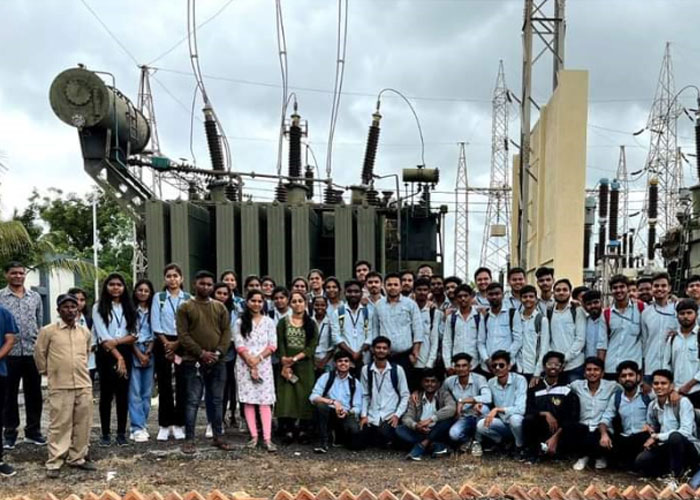
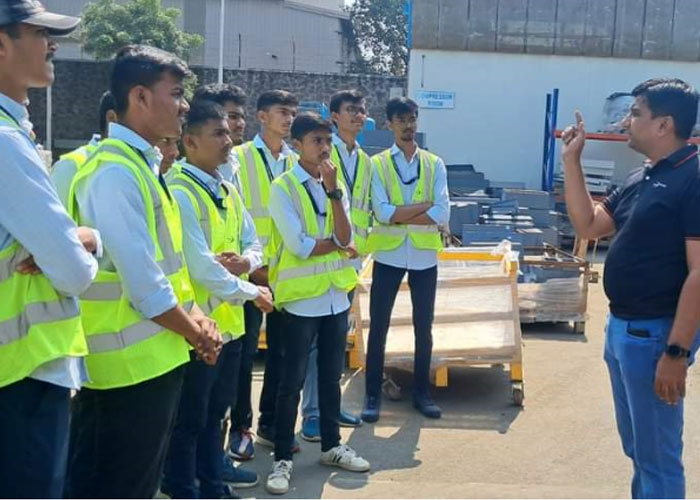
- Invited talks by Industry experts and industrial visits for all the courses.
- Placement for all the interested students in all companies including core and software.
Vision of the Department
To create socially conscious electrical professionals through high-quality education and emerge as the centre of excellence to meet industry and society requirements.
Mission of the Department
- To facilitate an adaptive learning environment focusing on fundamental knowledge and human values with an appropriate blend of practical exposure.
- To enable teachers and students to do influential joint research on societal and industry demands, enhancing their capacity for lifelong learning.
- To create competent, socially responsible, and innovative engineers to contribute effectively toward solving global issues of the 21st Century.
Demonstrate expertise in the field of Electrical Engineering and related areas, providing innovative and effective solutions for contemporary problems.
Establish themselves in the engineering profession as entrepreneurs, higher education aspirants, and researchers, locally and globally.
Get involved in sustained learning through state-of-the-art technologies, professional development, and self-study for solving societal problems.
Exhibit leadership and teamwork skills while working in a diverse and interdisciplinary culture to achieve professional and organizational goals.
Understand, analyze, simulate, design, prototype, maintain and troubleshoot different electrical systems employing electronics, machines, and electrical and electronics systems.
Contribute to finding solutions to real-life problems by demonstrating excellent teamwork, communication, project management skills, strong ethics and sensitivity to society and global issues.
Engineering knowledge: Apply the knowledge of mathematics, science, engineering fundamentals, and an engineering specialization for the solution of complex engineering problems.
Problem analysis: Identify, formulate, research literature, and analyse complex engineering problems reaching substantiated conclusions using first principles of mathematics, natural sciences, and engineering sciences.
Design/development of solutions: Design solutions for complex engineering problems and design system components or processes that meet the specified needs with appropriate consideration for public health and safety, and cultural, societal, and environmental considerations.
Conduct investigations of complex problems: Use research based knowledge and research methods including design of experiments, analysis & interpretation of data and synthesis of the information to provide valid conclusions.
Modern tool usage: Create, select, and apply appropriate techniques, resources, and modern engineering and IT tools, including prediction and modelling to complex engineering activities, with an understanding of the limitations.
The engineer and society: Apply reasoning informed by the contextual knowledge to assess societal, health, safety, legal, and cultural issues and the consequent responsibilities relevant to the professional engineering practice.
Environment and sustainability: Understand the impact of the professional engineering solutions in societal and environmental contexts, and demonstrate the knowledge of, and need for sustainable development.
Ethics: Apply ethical principles and commit to professional ethics and responsibilities and norms of the engineering practice.
Individual and team work: Function effectively as an individual, and as member or leader in diverse teams, and in multidisciplinary settings.
Communication: Communicate effectively on complex engineering activities with the engineering community and with t h e society at large, such as, being able to comprehend and write effective reports and design documentation, make effective presentations, and give and receive clear instructions.
Project management and finance: Demonstrate knowledge and understanding of the engineering and management principles and apply these to one’s own work, as a member and leader in a team, to manage projects and in multidisciplinary environments.
Life-long learning: Recognize the need for, and have the preparation and ability to engage in independent and life-long learning in the broadest context of technological change.
Our Recruiters